


I’ve been washing myself the wrong way for years. Probably. And I didn’t figure that out until I actually dug into the research instead of grabbing whatever was on sale at Target.
Here’s the thing — most of us pick our shower product based on what our mom bought when we were seven, or whatever smells good in the aisle. That’s not a strategy. That’s just habit. And habits in the bathroom cost you real money, affect your skin’s long-term health, and (this one genuinely caught me off guard) leave an environmental footprint most people never once consider.
So I went through the studies, consulted some dermatologists, and did the math myself. What I found flipped the conventional wisdom in ways I wasn’t expecting.
Fact 1: Bar Soap Is Dramatically Cheaper Per Wash
Not slightly cheaper. Dramatically.
A standard Dove bar (3.75 oz) runs about $1.50 and delivers roughly 70-80 washes. That works out to around 2 cents per wash. A 16 oz bottle of Dove body wash costs around $7 and gives you maybe 32-40 washes, depending on how heavy-handed you get with it. That’s 17-22 cents per wash.
You’re spending 8-10 times more for the liquid version. Over a year, for a single person, that gap adds up to $50-70 easily. For a family of four? You’re looking at $200+ annually just because someone decided lather needed to come in a pump bottle.
Fact 2: Body Wash Has a Better pH for Most Skin Types
This is where the body wash crowd earns some points back.
Traditional bar soaps — your classic Ivory, Dial, even some fancier drugstore bars — carry a pH between 9 and 11. Your skin’s natural pH sits around 4.5 to 5.5. That gap matters more than most people realize. A 2020 paper in the Indian Journal of Dermatology found that high-pH cleansers can disrupt the acid mantle (that thin protective layer on your skin), leading to dryness, irritation, and in people with eczema, outright flare-ups.
Body washes are typically formulated at pH 5.5-7, much closer to what your skin actually wants.
But — and this is a big but — newer syndet bars (synthetic detergent bars) like CeraVe Hydrating Bar or Dove Sensitive Skin are specifically pH-balanced. They sidestep the problem entirely. So that old “bar soap dries you out” complaint doesn’t hold across the board anymore.
Fact 3: Your Loofa Is Dirtier Than You Think
Most people use a loofah or shower puff with their body wash. Fair enough. Except a 2020 study from Simmons University found that synthetic mesh loofahs can harbor Pseudomonas aeruginosa and other bacteria within just a few days of regular use. Most people replace theirs… never? Maybe every six months if they remember.
Bar soap, used directly on skin and rinsed off, doesn’t accumulate bacteria the same way. You’re not storing anything in a dense mesh network hanging in a warm, humid shower.
So that supposedly hygienic body wash routine might actually be introducing more bacteria to your skin if you’re scrubbing with an old sponge. Worth thinking about.
Fact 4: Bar Soap Wins the Environmental Argument Handily
This one’s fairly one-sided. Bar soap requires almost no packaging — maybe a small cardboard wrapper. Body wash comes in a plastic bottle that most municipal recycling programs handle inconsistently at best.
A 2009 life cycle analysis published in the International Journal of Life Cycle Assessment — one of the first major studies to compare the two directly — found that liquid soap’s carbon footprint runs roughly 25% higher than bar soap per wash. It takes more energy to produce, consumes more water in manufacturing, and generates substantially more waste through packaging.
And things haven’t improved since 2009. Americans spent $3.2 billion on liquid body wash in 2022 alone, according to Statista. That’s an enormous amount of plastic.
Fact 5: Sharing Bar Soap Is Actually Fine
The “bar soap spreads germs” fear is mostly urban legend.
A 1988 study in the journal Epidemiology & Infection — old, yes, but it’s been replicated — deliberately contaminated bars of soap with E. coli and Staph bacteria, then had participants wash with them. No transmission to participants was detected. The rinsing process clears bacteria from the surface before they can colonize your hands.
That said. If your bar soap sits in a puddle of standing water and looks like it’s developed its own ecosystem, throw it out. A soap dish with proper drainage isn’t optional — it matters.
Fact 6: Body Wash Wins for Targeted Skin Conditions
If you’re dealing with eczema, psoriasis, severely dry skin, or rosacea, body wash is probably the smarter call — specifically because the formulations are more controlled and far easier to medicate.
Products like Aveeno Skin Relief Body Wash (launched in 2017 with colloidal oatmeal for eczema-prone skin) or Vanicream Gentle Body Wash are built to deliver active ingredients at precise concentrations. You can’t replicate that in bar format with the same stability.
Your dermatologist isn’t writing prescriptions for a bar. There’s a reason for that.
Fact 7: Travel Logistics Favor Bar Soap Completely
TSA’s 3.1 oz liquid rule has been around since 2006. It’s annoying and it’s not going anywhere. A full-sized bar of soap flies free — no quart-sized bag, no fiddly mini bottles, no paying $12 for a 2 oz travel body wash at Hudson News.
Frequent flyers figured this out years ago. If you travel even four or five times a year, switching to a travel bar alone saves you real money and genuine hassle.
Fact 8: Fragrance Sensitivity Cuts Both Ways
Both products can irritate sensitive skin. But body wash tends to pack a denser cocktail of synthetic fragrances, preservatives (parabens, methylisothiazolinone), and surfactants that stick around on your skin after rinsing.
Bar soaps — particularly fragrance-free options like Vanicream Bar Soap or Dr. Bronner’s Baby Unscented — tend toward shorter ingredient lists. Simpler chemistry means fewer potential irritants. If you’ve been breaking out or noticing post-shower itching, check your body wash ingredients before anything else.
Bottom Line
Here’s what I genuinely haven’t seen anyone else say clearly: the bar soap vs body wash debate almost always gets framed as a product question when it’s really a skin condition question dressed up as a preference. Most healthy adults with normal skin are overpaying for body wash based on marketing that convinced an entire generation bars are outdated. But if your skin has specific needs — eczema, dryness, sensitivity — the formulation control in body wash is genuinely worth the premium.
The answer isn’t “which is better.” It’s “which is better for what your skin is actually doing right now.” And that answer can shift with the seasons, your stress levels, your climate, and your age.
Frequently Asked Questions
Is bar soap more hygienic than body wash?
Neither is definitively more hygienic. Bar soap doesn’t transmit bacteria during normal use, per published research. But scrubbing with a dirty loofah introduces its own contamination risk. Clean application method matters more than format.
Does bar soap really dry out your skin?
Traditional bars with high pH (9-11) can disrupt your skin barrier. Syndet bars like CeraVe Bar or Dove Sensitive Skin are pH-balanced and don’t have this problem. Not all bars are the same thing.
Which is better for the environment, bar soap or body wash?
Bar soap. Lower carbon footprint per wash, minimal plastic packaging, and less water used in production. A 2009 life cycle analysis put body wash roughly 25% higher in environmental impact per use.
Can I use bar soap on my face?
Most dermatologists say no — even pH-balanced bars. Facial skin is thinner and more reactive than body skin. Stick to a dedicated facial cleanser and keep the bar for everything else.
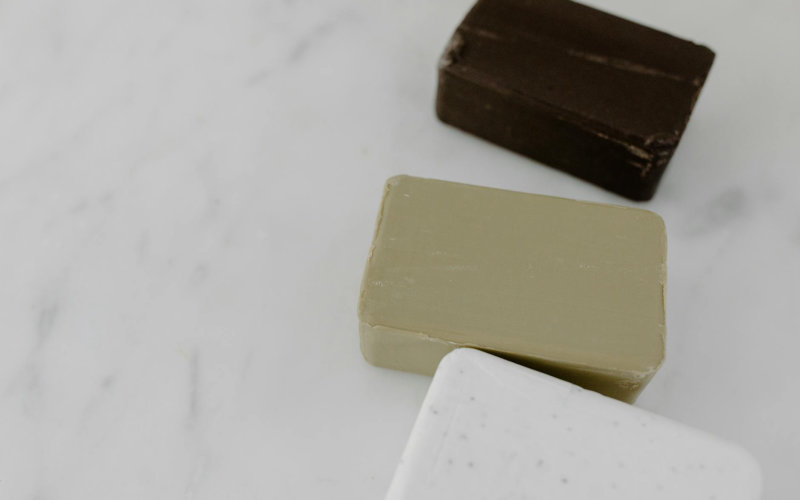
Photo by Tara Winstead on Pexels