
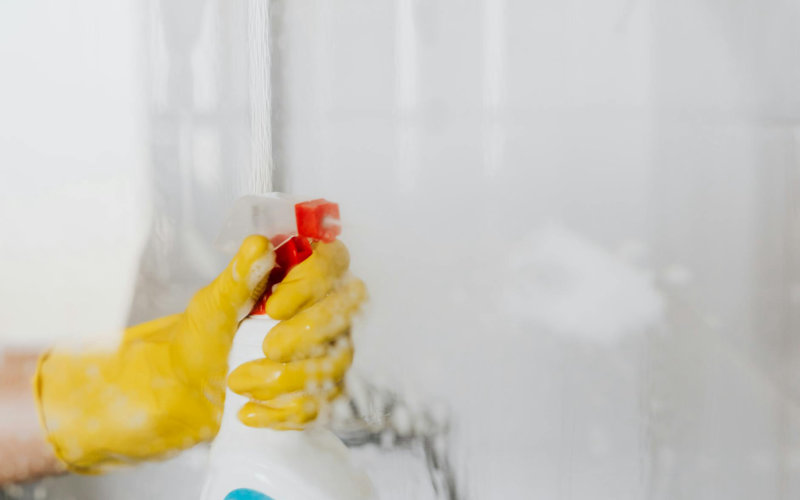


I spent 45 minutes scrubbing my shower door last spring. Forty-five minutes. With a sponge, a store-bought spray, and a level of rage that probably concerned my neighbors. The door looked maybe 15% better afterward, and my wrist felt like I’d been arm-wrestling a professional.
Here’s what nobody tells you: scrubbing hard water stains is mostly pointless. The mineral deposits that create that cloudy, crusty film—primarily calcium carbonate and magnesium silicate—don’t respond well to mechanical force. They respond to chemistry. You need to dissolve them, not grind them. Once I figured that out, a job that used to take an hour started taking about ten minutes.
So if you’re standing in your bathroom right now staring at what looks like someone frosted your glass with chalky concrete, this is for you.
What You’re Actually Fighting (And Why It Matters)
Hard water stains aren’t dirt. They’re mineral deposits left behind every single time water evaporates off your glass. According to the U.S. Geological Survey, about 85% of American homes have hard water—water with high concentrations of dissolved calcium and magnesium. Every shower, every splash, every spray leaves a thin layer of those minerals behind.
Over weeks, those layers stack up. Then they bond. Then they start laughing at your Scrubbing Bubbles.
The key insight is this: calcium and magnesium deposits are alkaline. Acids break them down. That’s the whole game.
The White Vinegar Method (Free and Shockingly Effective)
White distilled vinegar is acetic acid. Mild enough to use safely in your bathroom, but strong enough to dissolve calcium buildup pretty aggressively. And you almost certainly already have it.
Here’s the exact process I use. Warm up about two cups of undiluted white vinegar—not hot, just warm—and pour it into a spray bottle. Spray your glass door thoroughly, saturating the worst areas. Then comes the critical part most people skip: wait. Set a timer for 20 to 30 minutes and walk away. The acid genuinely needs that time.
After soaking, wipe with a microfiber cloth using gentle circular motions. For really stubborn spots, a soft plastic scraper (the kind sold for car windows) works without scratching the glass. Rinse with water and dry immediately—letting it air dry just starts the whole miserable cycle over again.
Doors that haven’t been touched in months might need two applications. Don’t rush it.
The Baking Soda Paste for Tougher Buildup
Sometimes vinegar alone isn’t enough. If you’ve got stains that have been sitting there since, let’s say, before you moved in, you need a paste.
Mix baking soda with just enough dish soap to make a thick paste—roughly two tablespoons of baking soda to one teaspoon of Dawn or similar. Apply it directly to the stained areas with your fingers or a sponge, then spray it with that warm vinegar. It’ll fizz. That fizzing is actually doing real work.
Let it sit for 15 minutes. Then wipe with a damp microfiber cloth. The mild abrasion from baking soda combined with the chemical reaction lifts deposits that vinegar alone can’t budge, without scratching the glass.
This combo genuinely surprised me the first time I tried it. Gone in one round. Stains I’d been pretending not to notice for six months.
Commercial Options That Actually Work (And Ones That Don’t)
Not every commercial cleaner deserves your money. But some are legitimately great.
Bar Keepers Friend (the powder version, not the spray) is a calcium oxalate-based cleaner that’s been around since 1882. Slightly acidic, contains a fine abrasive that won’t scratch glass. Make a paste with water, apply it to the door, let it sit for 5 minutes, wipe, rinse. It runs about $3 at any grocery store and outperforms most products that cost four times as much.
CLR (Calcium, Lime, and Rust Remover) is another solid pick. It’s a stronger acid blend—excellent for really severe buildup. But read the instructions carefully, because it’s not something you want sitting on chrome fixtures for long, and you’ll need ventilation.
Skip anything primarily surfactant-based (most generic “bathroom sprays”) for actual mineral deposits. Those are formulated for soap scum, which is a completely different problem.
The Dryer Sheet Trick for Light Maintenance
This one sounds ridiculous. It works.
A dampened used dryer sheet, rubbed gently over light water spots, removes early-stage buildup surprisingly fast. The fabric softener residue helps lift mineral deposits before they fully bond. My neighbor stumbled onto this by accident back in 2019 and I thought she’d lost the plot—until I tried it myself.
It’s not a fix for heavy staining. But as a quick weekly wipe-down? Weirdly effective.
How to Prevent Hard Water Stains From Coming Back
Removal is satisfying. Prevention is smarter.
A squeegee after every shower. That’s genuinely it. An $8 squeegee from Amazon or Target, used for 30 seconds after you step out, eliminates most of the water that would otherwise evaporate and leave deposits behind. I keep mine mounted right on the shower wall so there’s zero excuse to skip it.
You can also apply a water-repellent glass treatment—Rain-X (yes, the windshield product) or dedicated shower door sealants like EnduroShield. These create a hydrophobic layer that makes water bead up and roll off instead of sitting there slowly calcifying. Reapply every three to six months. It’s one of those things that makes your future self want to genuinely hug your past self.
A Word on What NOT to Do
Don’t use steel wool. Don’t use abrasive scrubbing pads with a hard plastic backing. And please, for the love of everything, don’t reach for undiluted bleach—it won’t touch mineral deposits because bleach is a disinfectant, not an acid. You’ll just breathe harsh fumes for zero gain.
Also don’t let acid cleaners linger on metal door frames. Rinse everything thoroughly when you’re done.
Bottom Line
Here’s something I never see anyone else say: the reason hard water stains feel impossible isn’t because they’re structurally difficult to remove—it’s because we wait too long between cleanings and then expect a two-minute spray to undo months of mineral layering. The chemistry that dissolves these deposits works fast, but it needs surface area. A thin, fresh layer? Vinegar handles it in minutes. Twelve layers of calcified minerals? Even the best cleaner needs multiple passes and real dwell time. The actual secret is interval, not effort. Clean at least every two weeks, squeegee daily, and you’ll never spend 45 minutes on a shower door again.
Frequently Asked Questions
How long should I let vinegar sit on my shower door?
At least 20 minutes for moderate buildup. For heavy staining, you can leave it up to an hour—just keep the glass wet by respraying every 15 minutes or so. Don’t let the vinegar dry on the surface.
Will these methods scratch my glass?
White vinegar, CLR, and Bar Keepers Friend used with a soft microfiber cloth won’t scratch standard glass shower doors. Avoid anything metal or rough plastic. Soft plastic scrapers are fine.
Can I use lemon juice instead of vinegar?
Yes. Lemon juice contains citric acid, which dissolves calcium deposits effectively. It takes a bit longer than vinegar and costs more, but it works—and smells significantly better. Fresh-squeezed or bottled both do the job.
How often should I clean my shower glass to prevent buildup?
Every two weeks for a basic vinegar wipe-down, with daily squeegeeing after each shower. That schedule keeps deposits from ever reaching the “stubborn” stage in the first place.
Photo by www.kaboompics.com on Pexels