
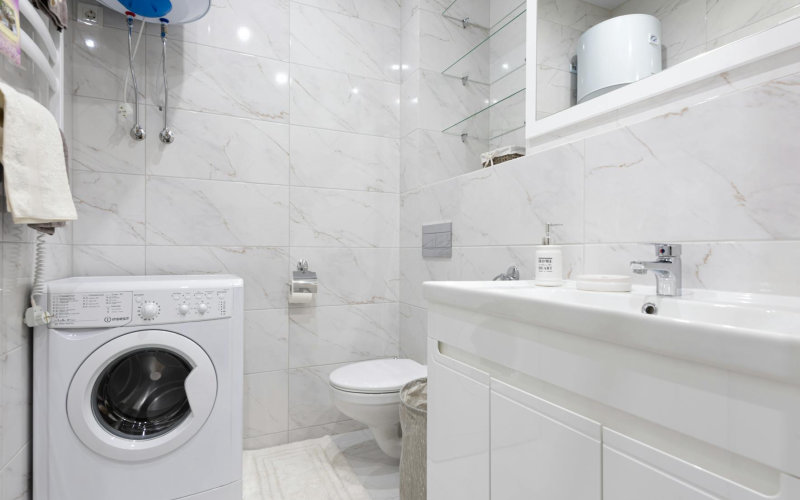


Small bathrooms are brutal. There’s nowhere for bad air to go. No cross-ventilation, no real airflow — just a tiny enclosed box where every smell gets trapped and amplified. And those aerosol sprays you’ve been reaching for? They don’t actually fix anything. They just coat the problem in a floral cloud that dissolves twenty minutes later.
I’ve been writing about home cleaning and hygiene since 2012, and the bathroom smell question comes up constantly. Readers try everything — plug-in fresheners, scented candles, those little gels that sit on the tank. Most of it is just temporary noise.
So here’s what actually works. Not the spray-and-pray approach, but real strategies that target why small bathrooms smell bad in the first place. Nine of them.
1. Fix the Moisture Problem First (Everything Else Depends on It)
This is the one most people skip entirely. Smell in a small bathroom is almost always a moisture problem before it’s anything else. Mildew, bacteria, mold — they all thrive in damp air, and they all produce that musty, sour background odor that no amount of lavender spray can touch.
Run your exhaust fan for at least 15-20 minutes after every shower. Not during. After. This is where people go wrong. The fan needs time to actually pull humid air out, and stopping it the moment you leave cuts that process short.
If your fan is older than 2009-ish, it’s probably undersized by modern standards. The Home Ventilating Institute recommends 1 CFM per square foot of bathroom space. A 50-square-foot bathroom needs at least a 50 CFM fan — but many older homes have 35 CFM units installed back when energy conservation trumped air quality.
2. Baking Soda Is Boring but It Works Better Than Anything Fancy
Put an open container of baking soda in the corner. Not the sealed box — open it, pour it into a small bowl or ramekin. Baking soda is genuinely one of the best odor neutralizers around because it reacts chemically with acidic and alkaline odor molecules. It doesn’t just sit there looking domestic. It actually binds with the smell.
Replace it every 30 days. Put it in your calendar. After that it stops working and you’re just keeping a decorative bowl of powder on your counter.
You can drop 3-4 drops of essential oil into the bowl if you want a faint scent. Eucalyptus and tea tree are both antimicrobial, so they’re pulling double duty.
3. Clean the Toilet Tank (You Probably Never Have)
Lift the lid off your toilet tank right now. Go ahead. What does it smell like? For most people — especially with older plumbing — the answer is “not great.” Bacteria accumulate in the tank, and every single flush sends that air into the room.
Drop a few tablespoons of white vinegar into the tank once a month. This is separate from your bowl cleaner. The tank itself is chronically overlooked, and it’s a surprisingly significant source of that low-level bathroom smell nobody can quite locate.
4. Activated Charcoal Bags Are Genuinely Underrated
These run about $10-15 for a two-pack (brands like Moso Natural have been selling them since around 2014) and they pull moisture and odors out of the air passively. No electricity, no fragrance, just quiet absorption.
Hang one behind the toilet or set one near the sink. Recharge them by leaving them in direct sunlight for an hour every month. They’ll last about two years before they genuinely stop working.
Here’s why I prefer these over plug-in deodorizers: they don’t add anything to your air. They just strip out what’s already there. For anyone in the house with asthma or fragrance sensitivities, that distinction matters enormously.
5. Your Towels Are Part of the Problem
Wet towels in a small bathroom are an odor bomb with a slow fuse. They take ages to dry in a cramped, humid space, and damp fabric is essentially a bacteria buffet. That sour smell you notice after a few days? That’s microbial growth, full stop.
Hang towels spread completely open, not folded over a bar. Add a second hook or a towel ladder if space is tight. And wash them more often than you think you need to — every 3-4 uses, not once a week.
Wash them HOT. A 2019 study by Philip Tierno at NYU found that warm-water washing doesn’t kill the bacteria responsible for fabric odors nearly as effectively as hot water. This one’s worth taking seriously.
6. Put a Small Potted Plant in There
Boston ferns, spider plants, peace lilies. All of them absorb airborne compounds and contribute humidity (which sounds counterintuitive, but controlled plant transpiration actually helps regulate moisture rather than spike it). NASA’s clean air study from 1989 — still one of the most-cited indoor plant studies ever conducted — identified several of these species as genuinely effective air purifiers.
One medium-sized plant is plenty for a small bathroom. Just make sure it gets indirect light from a window, or you’ll lose it within a month.
7. Drain Cleaning Is the Most Overlooked Odor Source
The smell creeping up from your bathroom drain is one of the worst offenders and one of the most ignored. Hair, soap scum, and organic debris accumulate in the pipe and they rot. That smell isn’t subtle.
Pour half a cup of baking soda down the drain, follow it with half a cup of white vinegar, let the whole thing sit for 20-30 minutes, then chase it with hot water. Once a month. It makes an almost embarrassing difference in how the room smells afterward.
8. Keep Surfaces Genuinely Dry
Countertops, the base of the toilet, the floor around it. These are spots that get repeatedly wet and never fully dried out. Bacteria doesn’t need much — just a reliably damp surface and a little patience.
Wipe down your countertop after washing your hands. Four seconds. Same with the floor around the toilet — a quick pass with a dry cloth twice a week stops that low-level ammonia smell that creeps into older bathrooms and refuses to leave.
9. Simmer Pots and DIY Reed Diffusers (No Spray Required)
Reed diffusers work remarkably well in small bathrooms because the diffusion is slow and constant rather than a sudden fragrance assault. Fill a small glass jar with carrier oil (fractionated coconut oil does the job), add 10-12 drops of your preferred essential oil, and stick in 4-5 wooden skewers. Flip them every few days.
Cost: about $3 to make. Lasts 4-6 weeks.
Bottom Line
Here’s something I rarely see mentioned anywhere: the reason small bathrooms smell bad faster than large ones isn’t just surface area — it’s the air-to-surface ratio. You’ve got the same odor-producing surfaces (toilet, drain, towels) but far less air volume to dilute those smells. So your cleaning frequency needs to scale up as your bathroom size scales down, not stay identical. Most people clean a small bathroom on the same schedule as a larger one. That’s the actual root problem. Everything else is just symptom management.
Frequently Asked Questions
How long does it take for baking soda to absorb bathroom odors?
Baking soda starts working almost immediately, but you’ll notice a real difference within a few hours of placing an open container in the room. The key is keeping it open and swapping it out monthly.
What plants are best for a windowless bathroom?
Snake plants (Sansevieria) are your best bet — they tolerate low light better than almost anything else and still filter air effectively. Peace lilies can work too, but they’ll need at least some indirect light to survive long-term.
Does white vinegar actually neutralize odors or just cover them?
Neutralizes. The acetic acid in vinegar reacts chemically with many odor-causing alkaline compounds, breaking them down rather than masking them. The vinegar smell itself clears out within 30-45 minutes of application.
How often should I really clean a small bathroom to keep it smelling fresh?
Light daily maintenance — wiping surfaces, keeping towels dry — plus a deeper clean every 4-5 days is realistic for a heavily used small bathroom. Weekly deep cleaning works for lower-traffic spaces, but honestly most households underestimate how often their bathroom actually gets used and stretch the schedule way too long.
Photo by Max Vakhtbovych on Pexels