


I’ve cleaned a lot of bathrooms in my life. My own, my parents’, a few rental properties I managed back in 2014, and honestly I used to think I was pretty decent at it. Spray some cleaner, scrub the bowl, wipe the seat, done. Right?
Wrong. So wrong.
Turns out a lot of what passes for “toilet cleaning” is basically just shuffling bacteria around while making yourself feel productive. A 2022 University of Arizona study found toilet surfaces can harbor up to 3.2 million bacteria per square inch — and certain habits actually spread that bacteria further than if you’d skipped cleaning entirely. Here are the seven mistakes I see people make constantly, including ones I made myself for years.
1. You’re Flushing With the Lid Open
This one makes me cringe every time I think about it. When you flush an open toilet, you’re essentially creating a bacteria fountain. The formal term is “toilet plume” — aerosolized particles that shoot up to 6 feet into the air during every single flush.
Those particles land on your toothbrush. Your hand towels. The counter where you set your glasses. Dr. Charles Gerba (the so-called “Dr. Germ” from the University of Arizona) has been studying this since the 1970s, and his research consistently shows fecal bacteria spreading several feet beyond the bowl with each flush.
Close the lid. Every time. It takes one second and it genuinely does more for your bathroom’s bacterial situation than almost any cleaning product ever will.
2. You’re Not Letting Disinfectant Actually Sit
Here’s what most people don’t realize about disinfectants: they need contact time to work. You spray Lysol or a bleach-based cleaner, wipe it off immediately, and you’ve basically accomplished nothing. The label on most EPA-registered disinfectants says you need 2 to 10 minutes of wet contact time to actually kill pathogens like E. coli and norovirus.
I timed myself once. I was wiping the toilet seat down about 15 seconds after spraying. That’s not disinfecting. That’s just relocating the problem.
Spray it, walk away, come back. Do something else for five minutes. The product literally cannot do its job if you’re rushing it along.
3. Reusing the Same Cloth or Sponge
This one’s genuinely hard to hear if you’re eco-conscious. But wiping the toilet with a cloth and then using that same cloth on any other bathroom surface? You’re cross-contaminating everything. One study published in Applied and Environmental Microbiology in 2018 found that reused cleaning cloths contained higher bacterial concentrations than the surfaces they were supposed to be cleaning.
Think about that. Your cleaning tool becoming dirtier than the dirt itself.
If you want to stay reusable, designate specific colors for specific zones — toilet only gets the red cloth, sink gets the blue, never swap them. And wash them in water above 140°F, because most standard warm-water cycles won’t kill much of anything anyway.
4. Ignoring the Outside of the Tank and the Base
Everyone scrubs the bowl. Most people wipe the seat. But the tank exterior and the floor around the toilet base? Completely forgotten.
Here’s the bad news. That area where porcelain meets floor grout collects splatter and moisture constantly — it’s one of the most bacteria-dense spots in the entire bathroom. In my experience, when people complain about mysterious odors that won’t quit no matter how much they clean, it’s almost always the base grout situation.
So get down there. Use a disinfecting spray and an old toothbrush along that base seam. Do it once a week and you’ll notice the smell difference within two weeks, flat.
5. Using Bleach and Other Cleaners Simultaneously
So you figure more cleaning agents means more cleaning power. Totally logical. Also potentially dangerous, and definitely counterproductive.
Mixing bleach with ammonia-based cleaners (which includes a shocking number of “all-purpose” sprays) creates chloramine gas. Not a huge amount in household quantities, but enough to cause respiratory irritation. And beyond the safety issue — some combinations simply neutralize each other. You end up with two inactive products sitting on your toilet and zero actual disinfection happening.
Stick to one product per session. If you want to alternate between a bleach-based bowl cleaner and a different surface spray, rinse thoroughly in between. The 2021 update to CDC cleaning guidelines for household surfaces specifically warns against mixing product types for exactly this reason.
6. Scrubbing the Bowl Too Aggressively
This one surprised me when I first came across it. Aggressive scrubbing with a stiff-bristle brush can actually scratch the porcelain inside your toilet bowl. And those micro-scratches become perfect little hiding spots for bacteria and mineral deposits.
Once you’ve scratched the glaze, you’ve permanently changed the surface texture in a way that makes future cleaning harder. This is why heavily-scrubbed older toilets often develop that stubborn grayish tint that won’t budge no matter what you throw at it.
Use a softer brush (look for ones labeled “non-scratch” — OXO makes a solid option for around $12). Apply cleaner and let it soak before you touch the brush at all. The chemical does most of the work if you give it enough time, and you won’t need to scrub nearly as hard.
7. Cleaning on a Schedule Instead of Cleaning When It’s Needed
Weekly toilet cleaning is a perfectly decent default. But it’s not always enough — and sometimes it’s overkill in the wrong direction, where people wait for “cleaning day” even when the toilet obviously needs attention sooner.
The real standard should be: if there’s visible residue, or it’s been used heavily by multiple people (sick household members, kids, guests), clean it then. Don’t wait for Saturday.
And conversely, the “deep clean every surface with four products weekly” approach some cleaning influencers push? That can cause product buildup, which ironically creates more residue for bacteria to cling to. Simpler and more targeted beats elaborate and scheduled almost every single time.
Bottom Line
Here’s something I genuinely haven’t seen written anywhere else: the biggest bathroom cleaning mistakes aren’t really about which products you’re using — they’re about your relationship with time. Too little contact time for disinfectants, too much scrub time on porcelain, cleaning on a rigid weekly schedule instead of responding to actual conditions. The toilet doesn’t care about your routine. It just needs the right conditions for long enough to actually work. Fix the timing, and almost everything else about your bathroom cleaning mistakes and toilet hygiene falls into place.
Frequently Asked Questions
How often should you actually clean a toilet?
In a household with 2-4 people, twice a week is a realistic target for a quick disinfecting wipe-down, with a deeper bowl scrub once a week. If someone’s been sick, clean it immediately after each use.
Does bleach really disinfect better than other products?
Not automatically. Bleach is highly effective but still requires that contact time — at least 5 minutes. Some hydrogen-peroxide-based products perform comparably with less corrosive risk to surfaces and skin.
Can toilet plume really spread bacteria to my toothbrush?
Yes, and it’s well-documented. Keep your toothbrush in a cabinet or at minimum 6 feet from the toilet, and always flush with the lid down.
What’s the best toilet brush to use?
A silicone brush is easier to keep dry and clean than traditional bristle brushes, which trap moisture and quietly become bacterial hotspots themselves. Replace any brush at least every 6 months regardless of type.
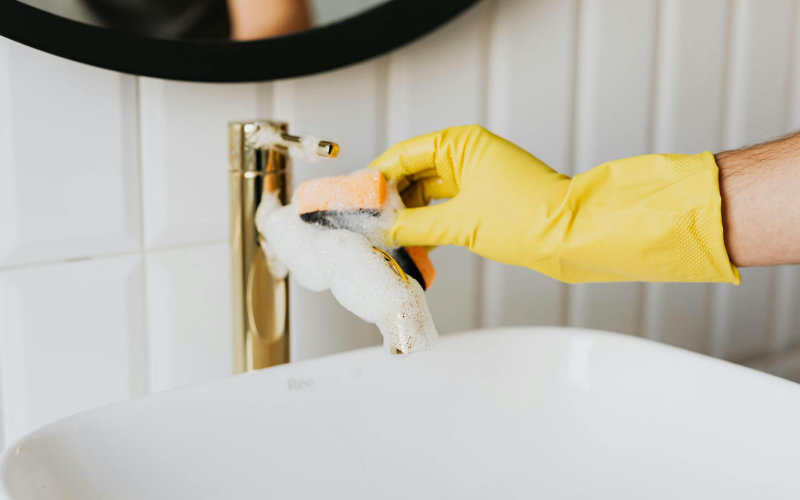
Photo by www.kaboompics.com on Pexels