
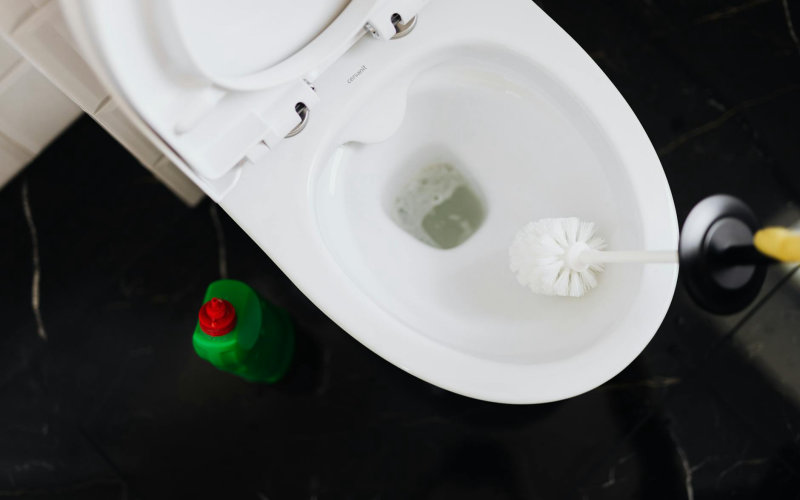


Nobody talks about toilet brushes at dinner parties. But you use one every single week, and picking the wrong one makes cleaning feel worse than it already is. I’ve been writing about home organization and cleaning gear since 2012, and I promise you—this is one of those purchases where the $8 plastic option and the $65 stone-effect holder are genuinely different products, not just different price tags on the same experience.
So let’s get into it properly. Not just “here are five options,” but actually walking through what the bristles do, what the holder material means for hygiene, and why some “stylish” brushes are basically useless at the job they’re supposed to do.
Fair warning: this guide has opinions. Strong ones.
Why Your Toilet Brush Choice Actually Matters for Hygiene
Here’s what most buying guides skip entirely. The brush isn’t some cosmetic tool for casual bowl-swishing. You’re trying to reach under the rim—that curved lip at the top—where bacteria and mineral deposits pile up even after a full flush. Flat, uniform bristles can’t get there. A cheap fan-shaped head usually can’t either.
Microbiologists at the University of Arizona ran household hygiene studies between 2018 and 2021, and bathroom surfaces—cleaning tools included—consistently turned up among the highest bacterial load areas in the home. Your toilet brush, sitting wet inside a sealed holder, becomes a petri dish within 24 to 48 hours.
So the holder matters just as much as the brush. Ventilation. Drainage. Material. These aren’t premium upsells—they’re functional necessities.
Understanding Bristle Types and What They’re Actually Doing
Stiff nylon bristles are the workhorse. They’re what most brushes use, and they genuinely scrub rather than just smearing filth around. But there’s a quality spectrum here. Budget nylon frays fast, loses its shape after six or eight weeks, and starts shedding bristle bits into your bowl. Not great.
Silicone bristles got trendy around 2019 and 2020—brands like Simplehuman and OXO both pushed silicone-head versions pretty hard. The pitch was that silicone doesn’t harbor bacteria the way nylon does. That’s true. But silicone is also significantly less abrasive, which means it handles maintenance cleaning fine on a bowl you scrub twice a week, and falls completely flat on stubborn mineral rings or hard water staining.
My honest take? If you live somewhere with very hard water—Las Vegas, Phoenix, much of rural Texas—go nylon every time. Silicone is a nice-bathroom-in-a-nice-apartment choice for people who clean obsessively and often.
Matching Your Brush to Your Bathroom Style
Minimalist bathrooms (think Scandinavian, all-white, open shelving) tend to work best with matte white or stone-effect holders. The Brabantia MindSet series retails around $30-$40 and genuinely disappears into a clean bathroom. It looks like it belongs there.
Maximalist or eclectic spaces? You’ve got more fun choices. Brushed brass holders like the ones from Umbra (their Gloss collection runs about $25-$35) add real warmth. Ceramic holders—usually $20-$55 depending on the maker—work beautifully in vintage-style bathrooms with subway tile or claw-foot tubs.
Industrial bathrooms with exposed pipes and dark grout often pair well with matte black holders. The Yamazaki Home Tower series (Japanese brand, excellent quality, around $35) comes in matte black and white and has an incredibly clean profile for the price.
But don’t let aesthetics override function completely. I’ve seen gorgeous marble-look resin holders with no drainage hole at the bottom, so the brush just sits in a puddle of its own drip water indefinitely. That’s a hygiene problem wearing a pretty face.
Budget Breakdown: What You Get at Each Price Point
Under $15: You’re getting plastic. Usually functional, rarely durable. OXO makes a decent budget option around $12 that’s lasted me longer than most in this range. Expect to replace it within 12-18 months.
$15-$35: This is honestly where I’d tell most people to shop. Brands like Simplehuman, Brabantia, and Joseph Joseph play heavily here. Joseph Joseph’s Flex series (about $18-$22) has a clever angled head that actually improves under-rim reach—which is exactly where most brushes fail.
$35-$65: At this point you’re buying materials and aesthetics more than function. Stone-effect resin, powder-coated steel, ceramic. These look genuinely good long-term and tend to hold up better. Worth it if you care about the room feeling pulled-together.
Over $65: Limited functional upside. This is pure design. Some MENU and HAY pieces are genuinely beautiful objects, but they’re for people who treat their bathroom as a design statement. No judgment. Just know what you’re actually buying.
The Holder Situation: Ventilation, Drainage, and Material
Closed holders look cleaner. Open holders are actually cleaner. That’s the trade-off you’re navigating.
A closed cylinder traps moisture, promotes bacterial growth, and can develop a smell that transfers to the brush and—eventually—your bathroom air. If you use a closed holder, the brush needs to air-dry somewhere else before going back in, which defeats the purpose somewhat.
Open-top or caddy-style holders—where the handle sticks up and out—allow airflow around the bristles. Pair that with drainage holes at the base and you’ve got a genuinely more hygienic setup. The Simplehuman Toilet Brush with Caddy (around $30) gets this exactly right.
Material matters too. Chrome-plated metal rusts at the base once the coating chips. Powder-coated steel holds up much better. Pure stainless is ideal but expensive. Plastic is perfectly fine as long as there’s adequate drainage built in.
When to Replace Your Toilet Brush (Most People Wait Way Too Long)
Three months. That’s the standard guidance from cleaning experts, and honestly it’s pretty reasonable. Frayed or discolored bristles aren’t just ugly—they’re less effective and usually carrying more bacteria than a fresh brush would.
Silicone-head versions can stretch a bit longer since the material doesn’t degrade the same way. But check for discoloration on the head and around the handle base. Any persistent dark staining that won’t clean off? Replace it.
And if you’ve used the brush during a significant illness in the household—replace it immediately. Don’t try to disinfect your way out of that situation.
Bottom Line
Here’s something I haven’t seen anyone else say directly: the real problem with most toilet brush purchases is that people optimize for how the holder looks sitting on the floor and completely ignore how the brush head actually interacts with their specific toilet bowl shape. American standard-height toilets with elongated bowls, compact European-style round bowls, and low-flow designs all have different under-rim geometries. Before buying anything, physically check how much clearance exists under your rim and match a brush head to that space. A $15 brush with the right head profile will outclean a $60 brush that can’t reach where the grime actually lives.
Frequently Asked Questions
How often should I actually clean my toilet brush holder?
Weekly, or at minimum every two weeks. Rinse it with hot water when you clean the bowl, and do a proper disinfection spray-and-rinse monthly. Most people skip this entirely—and then wonder why the bathroom has a faint background smell.
Is a silicone toilet brush worth the extra cost?
For most people, no. Silicone is easier to clean and looks modern, but it genuinely struggles on mineral deposits and hard water rings. Best for soft-water areas and very frequent cleaning schedules.
Can I use the same brush for multiple bathrooms?
You really shouldn’t. Cross-contamination risk is real, and practically speaking, toilet bacteria are specific to individual bodies and plumbing. One brush per toilet is the correct answer here.
What’s the easiest type of holder to keep clean?
Open-caddy style with a drainage hole at the bottom and a smooth, non-textured interior. No crevices, no seams, nothing for bacteria to grip onto. Simplehuman and OXO both make solid versions of this in the $20-$35 range.
Photo by www.kaboompics.com on Pexels