
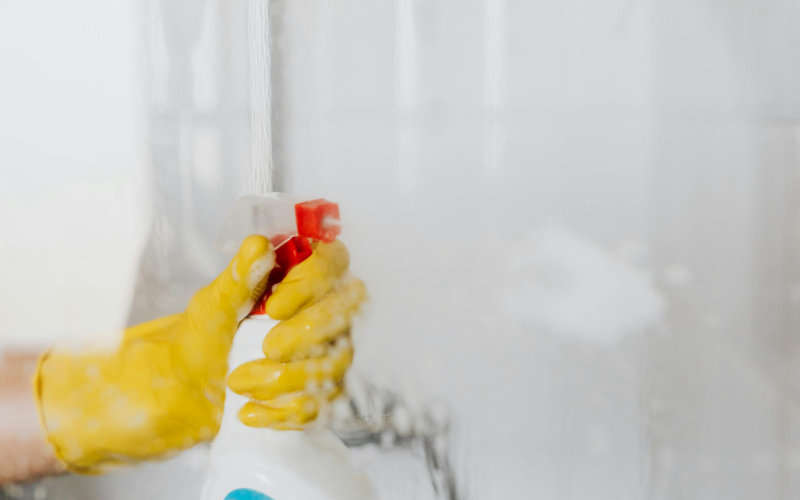


I used bleach for years. Every single time I spotted that familiar black fuzz creeping along my shower grout, I’d reach under the sink, grab the bottle, and spend twenty minutes gagging with the window cracked open like that would somehow protect my lungs. It wasn’t until 2019 — when my daughter started getting headaches every time I cleaned the bathroom — that I finally thought, okay, there has to be a better way.
There is. A much better one.
Here’s what most people don’t realize: bleach doesn’t actually kill mold roots. It strips the surface color, so the mold looks gone, but the mycelium (the living root structure underneath) survives and bounces back within weeks. You’re essentially giving it a haircut. Natural acid-based cleaners, though? They break down the cellular structure of mold spores in a way that’s genuinely more effective on porous surfaces like grout, caulk, and drywall.
Why Bleach Is Actually The Wrong Tool For Bathroom Mold
Chlorine bleach is water-based. And here’s the problem: grout and caulk are porous. The water carrier sits on top of the surface while the chlorine evaporates before it can penetrate deep enough to reach the roots. The EPA itself flagged this in their 2012 mold remediation guidelines — bleach is not recommended for porous surfaces.
So you end up with something that looks clean but isn’t. And you’ve soaked your bathroom in sodium hypochlorite, a compound tied to respiratory irritation, skin burns, and — per a 2023 Danish study of 5,600 cleaning professionals — a measurable uptick in asthma rates after long-term exposure.
Not great.
White Vinegar: Your New Best Friend
Undiluted white vinegar kills roughly 82% of mold species, according to research cited by the University of Connecticut extension program. That’s not a trivial number. And because it’s acidic, it actually penetrates porous surfaces — acetic acid breaks down the protein structures in mold cell walls rather than just bleaching them invisible.
Here’s how I do it: fill a spray bottle with straight, undiluted white vinegar (don’t water it down — this is not the moment for frugality). Spray the moldy area thoroughly. Walk away for at least an hour. Come back, scrub with a stiff-bristled brush, and rinse.
The smell dissipates within 30 minutes of drying. I know people hate that part. But honestly it’s less offensive than inhaling bleach fumes, and your lungs will thank you.
Hydrogen Peroxide: The Overlooked Powerhouse
Most people have 3% hydrogen peroxide sitting in their medicine cabinet right now, bought for some scrape that happened three years ago and mostly forgotten. Good news — it’s one of the most effective mold killers available, and it breaks down into oxygen and water after it does its job. Zero toxic residue.
Pour it into a spray bottle. Saturate the affected areas, let it sit for 10 minutes minimum (I usually push it to 15), then scrub and wipe clean. For stubborn buildup along caulk lines, try this: soak a strip of paper towels in hydrogen peroxide and press them directly against the caulk. Leave it for an hour or two. That extended contact time makes a real difference.
And if you want to combine hydrogen peroxide with white vinegar — don’t mix them in the same bottle (that produces peracetic acid, which can be irritating). But you can apply one, let it dry completely, then apply the other. Sequential application. Works brilliantly.
Baking Soda for Scrubbing and Prevention
Let’s be honest: baking soda alone won’t kill mold effectively. But it’s still a useful part of the process. It’s a mild abrasive that scrubs mold off surfaces without scratching tile, and it absorbs moisture — which is really the whole ballgame when it comes to prevention.
Mix it into a paste with a small amount of water. Work it into grout lines with an old toothbrush (seriously, keep one under the sink specifically for this), scrubbing in circular motions, then rinse. The gritty texture reaches pits and crevices that a flat sponge misses entirely.
After cleaning, a light dusting of dry baking soda in corners and along the base of your shower doors can absorb ambient moisture between sessions. Small habit, real payoff.
Tea Tree Oil: Small Bottle, Big Results
Tea tree oil costs more than vinegar — a 2oz bottle of something like Radha Beauty or NOW Solutions runs about $8-12. But you use so little per application that one bottle lasts forever. Two teaspoons in two cups of water makes an effective spray that doesn’t even need rinsing.
The active compound, terpinen-4-ol, is a proven antifungal. A 2011 study in the Journal of Antimicrobial Chemotherapy found tea tree oil was effective against Aspergillus and Candida strains — the same mold families that thrive in humid bathrooms. Spray it on and leave it. It keeps working as it dries.
The smell is strong but not unpleasant if you like anything medicinal or herbal. If you don’t, add a few drops of lavender essential oil to the spray. Problem solved.
How to Prevent Mold From Coming Back
Killing mold is reactive. Prevention is the actual win. Your bathroom needs three things: ventilation, light, and reduced moisture contact time.
Run your exhaust fan for 20 minutes after every shower — not just during. Most people switch it off the second they step out, but humidity lingers far longer than that. If your fan is more than 10 years old, hold a single sheet of toilet paper up to the vent; if it doesn’t stick, your fan isn’t moving enough air. Replace it. A Panasonic WhisperCeiling fan runs around $90 and the difference is genuinely dramatic.
Squeegee your shower walls after every use. Takes 45 seconds. Removes roughly 75% of the water that would otherwise sit there feeding mold colonies. I bought a $6 Oxo squeegee in 2020 and it honestly changed how I think about shower maintenance.
Bottom Line
Here’s the thing nobody talks about: bathroom mold is almost always a ventilation failure, not a cleaning failure. You can kill every mold spore in your bathroom today — with vinegar, hydrogen peroxide, whatever you like — and they’ll be back in three weeks if the moisture conditions haven’t changed. The cleaning is just maintenance. The real fix is airflow and dry time.
If your bathroom doesn’t have a working exhaust fan, or you’re not running it long enough, no cleaning method will give you a permanently mold-free bathroom. Fix the fan first. Then clean. That’s the order most guides get completely backwards.
Frequently Asked Questions
Does white vinegar really kill mold, or does it just clean the surface?
It genuinely kills mold — acetic acid breaks down mold cell walls rather than just bleaching them. But it works best on non-porous surfaces. For deep grout mold, let it soak for a full hour before scrubbing.
Is it safe to mix vinegar and baking soda for mold removal?
They cancel each other out. Mixing them triggers a neutralization reaction that kills the effectiveness of both. Use them separately — vinegar first, rinse, then baking soda paste for scrubbing.
How often should I clean my bathroom to prevent mold?
A light weekly spray of diluted tea tree oil or hydrogen peroxide on grout and caulk lines, combined with daily squeegeeing, handles most bathrooms just fine. Deep clean monthly.
What if the mold has gone through the caulk and into the wall?
That’s past DIY territory. If mold has pushed behind caulk or you see it spreading onto drywall, you’re potentially looking at structural mold — call a certified remediation specialist. The EPA recommends professional assessment for any patch larger than 10 square feet.
Photo by www.kaboompics.com on Pexels